
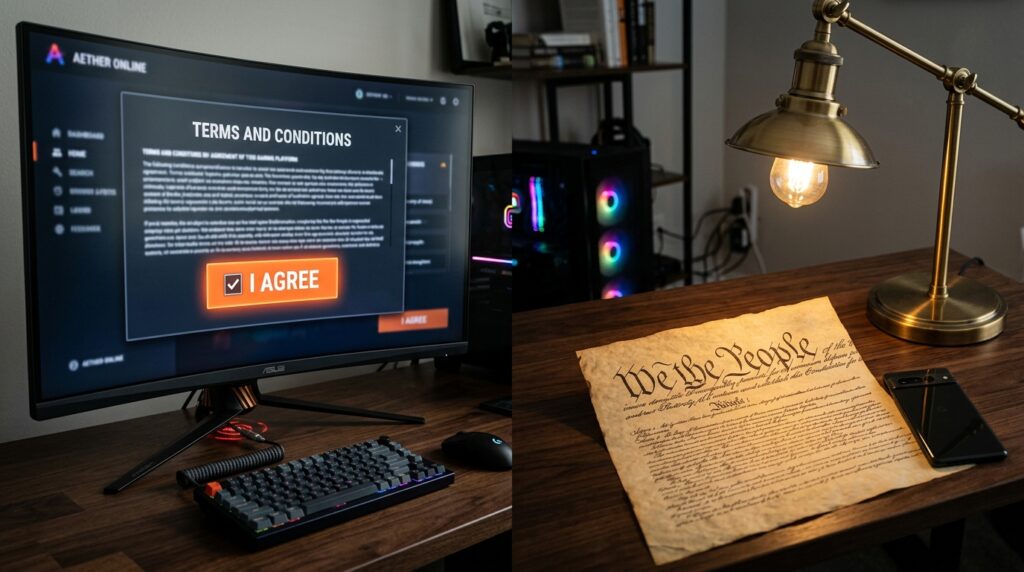
I signed up for a new online multiplayer gaming platform a few months ago. Like everyone else on the planet, when the massive, 45-page “Terms and Conditions” box popped up, I didn’t read a single word. I just scrolled straight to the bottom and clicked “I Agree.”
Two weeks later, the platform arbitrarily banned a player in my guild for casually complaining about a game update in the public chat lobby. When we tried to protest, the developers pointed directly to a obscure clause in that massive document we all skipped. It turned out we had legally consented to give up our right to free speech on their servers, allowed them to monitor our background apps, and agreed that they could delete our accounts whenever they felt like it with zero appeals process.
It was a stark reminder of a simple rule: if you don’t know the terms of service for the space you inhabit, you will get taken advantage of.
That night, my younger brother was losing his mind trying to memorize the Bill of Rights for his 9th-grade Civics class. He was staring at archaic phrases like cruel and unusual punishment, due process, and eminent domain. It looked to him like a dry, useless contract written by dead guys over two hundred years ago.
I knocked on his desk and pointed at his textbook. “Don’t treat it like a history assignment,” I told him. “The US Constitution is the literal Terms of Service agreement for living in America. It is the only thing stopping the government from treating your life, your phone data, and your freedom the way a toxic game developer treats a modded server.”
When you look at a standard high school study sheet, the Constitution looks incredibly clinical and intimidating. But once you strip away the heavy legalese, it’s actually a brilliant, high-yield operating system designed to protect you.
Whether you are a freshman prepping for a brutal unit exam, a parent trying to explain civic rights without a law degree, or someone who just wants a practical refresher on how our system runs, let’s look at the absolute most important amendments you need to know in plain, everyday language.
The Core Blueprint: The Ultimate Rulebook
Before looking at the specific adjustments (amendments), we need to understand what the document actually is. The US Constitution is the supreme master code of the country. It created the structural framework of the government, split power into three separate branches (Legislative, Executive, and Judicial) so no single person could act like a dictator, and established the ultimate baseline rules.
But when the founders finished writing the main structure, a bunch of people refused to sign off on it. Why? Because the original code only explained what the government could do. It didn’t explicitly state what the government could not do to ordinary citizens.
To fix this fatal flaw, they immediately went back and patched the code with the first 10 updates, known as the Bill of Rights. Since then, the country has added more updates, bringing the current total to 27 amendments.
The Heavy Hitters: 6 Crucial Amendments Decoded
You don’t need to memorize all 27 modifications to crush your 9th-grade exams. Teachers consistently focus on a specific handful of amendments because they directly impact your daily life. Let’s break down the essential lineup.
1. The First Amendment: The Daily Five
This is the absolute superstar of the Constitution. It groups five massive, core human protections into a single paragraph.
- Speech: You can express your opinions, criticize the president, or write a angry blog post without the police arresting you.
- Religion: The government cannot establish an official national religion, and they cannot stop you from practicing whatever faith you choose.
- Press: Journalists can report the truth and expose corruption without government censorship.
- Assembly: You can gather peacefully in public spaces for protests, rallies, or meetings.
- Petition: You can send a formal complaint or request to government officials demanding a change in policy.
The Real-World Trap: Free speech does not mean freedom from consequences. If you yell something dangerous in a crowded movie theater, or violate a private company’s terms of service on Discord or TikTok, you can absolutely still get kicked out or banned. The First Amendment strictly stops the government from punishing your voice—it doesn’t apply to private property or private apps.
2. The Second Amendment: The Shield of Security
This amendment protects a citizen’s right to own weapons for self-defense and organized security. It remains one of the most fiercely debated sentences in modern politics, focusing heavily on balancing public safety with individual freedom.
3. The Fourth Amendment: The Digital Privacy Guard
If you value the privacy of your smartphone, your backpack, or your bedroom, you need to thank the Fourth Amendment. It explicitly bans unreasonable searches and seizures.
The government cannot walk into your house, look through your car trunk, or seize your private property without a valid, highly specific reason. To do a search, law enforcement officers must go to a judge, present real evidence of a crime, and secure a official document called a warrant.
4. The Fifth Amendment: The Legal Safety Net
If you’ve ever watched a classic police drama or crime show, you’ve definitely heard an actor say, “I plead the fifth.” This amendment is your ultimate protection inside a courtroom loop.
1.Double Jeopardy Prevention:Protection 1.
The government gets exactly one fair shot to prove you committed a crime. If a jury finds you innocent at a trial, the prosecutor can never put you on trial for that exact same specific crime ever again, even if they find new evidence later.
2.No Self-Incrimination:Protection 2.
You cannot be forced to testify against yourself or answer questions that make you look guilty. You have the absolute right to remain silent and let your lawyer do the talking.
3.Due Process Baseline:Protection 3.
The state cannot just throw you in jail or seize your bank account because they feel like it. They must follow the exact same established, fair legal steps for every single citizen, regardless of wealth or status.
5. The Eighth Amendment: The Fairness Buffer
This amendment sets the boundaries for punishments. It bans cruel and unusual punishments and outlaws excessive bail. If someone gets caught shoplifting a candy bar from a corner store, a judge cannot set their bail at five million dollars or sentence them to have their hands chopped off. The punishment must logically fit the scale of the crime.
6. The Fourteenth Amendment: The Ultimate Equalizer
Passed after the Civil War, this is arguably the most powerful modern amendment in existence. It does two massive things:
- Citizenship Clause: Anyone born on US soil is automatically a full citizen with full rights, completely overturning old discriminatory laws.
- Equal Protection Clause: No state can make a law that denies equal treatment to its citizens based on race, gender, or background. It forces the law to treat a billionaire and a homeless person as exact equals under the legal system.
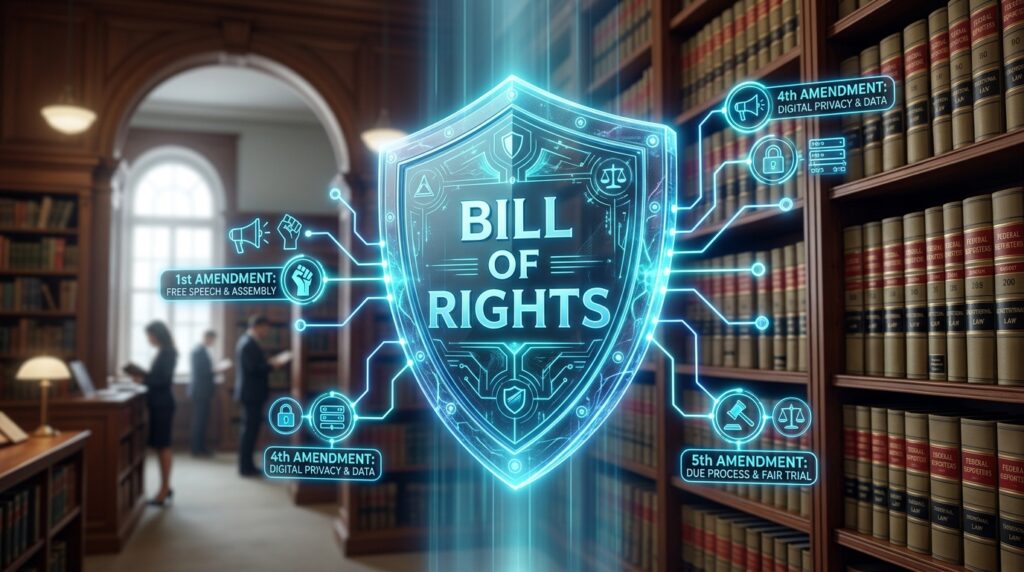
High-Yield Summary: The Amendment Quick Guide
When you need to review your concepts right before a quiz or double-check your flashcards, use this clean comparative matrix table to lock in the shortcuts.
| Amendment | Core Focus | What It Literally Protects |
| 1st Amendment | The Five Freedoms | Speech, Religion, Press, Assembly, Petition. |
| 2nd Amendment | Weapons | Right to bear arms for security. |
| 4th Amendment | Privacy | Stops police from searching your things without a warrant. |
| 5th Amendment | Courtroom Rights | Prevents double jeopardy and self-incrimination (Silence). |
| 8th Amendment | Punishments | Outlaws cruel punishments and impossible bail fees. |
| 14th Amendment | Equality | Guarantees equal protection and rights for all citizens. |
Common Mistakes That Drop History Grades
When completing worksheets or tackling multiple-choice sections on platforms like Albert.io, keep a sharp eye out for these three classic pitfalls:
1. Confusing the 4th and 5th Amendments
Students constantly mix these two up because they both deal with the police. Remember the timeline: the 4th Amendment happens on the street (searching your pockets, looking for a warrant). The 5th Amendment happens in the station and courtroom (interrogations, trials, and pleading the fifth).
2. Thinking Rights Are Absolute
Your rights end where another person’s safety begins. You have free speech, but you can’t use it to threaten someone. You have the right to assemble, but you can’t block an emergency room entrance. Understanding that civil liberties have logical boundaries is a key concept teachers look for in essay questions.
3. Forgetting the “State” Factor in the 14th Amendment
Originally, the Bill of Rights only applied to the federal government in Washington, D.C. A individual state could technically still pass laws violating your speech or privacy. The 14th Amendment changed everything by explicitly forcing individual state governments to follow the federal Bill of Rights. It locked the rules down across the entire map.
Free Interactive Tools to Ace Your Exam
If trying to read ancient parchment pages is making your eyes water, step away from the printout and check out these brilliant free web resources:
- Annenberg Classroom (The Interactive Constitution): An exceptional, free digital platform where you can click on any amendment to see a plain-English translation, read real courtroom case histories, and watch short, high-quality video breakdowns explaining how that specific right works in modern life.
- iCivics (Educational Video Games): Founded by a former Supreme Court Justice, this site features incredible, free browser games like “Do I Have a Right?” where you run your own constitutional law firm, analyze incoming clients’ scenarios, and match them to the correct amendment to win cases. It builds functional memory incredibly fast.
The Takeaway
Civics looks incredibly dry when you view it as a collection of old dates and numbers to memorize for a grade descriptor. But once you change your perspective, you realize it is a living, breathing protective shield.
The Constitution is the framework that keeps the engine of the country running fairly. By understanding your baseline terms of service, keeping your amendment numbers straight, and analyzing legal scenarios methodically, you won’t just ace your 9th-grade exams—you will navigate the real world with absolute confidence.